What Is allintitle? The KGR Search Operator Explained
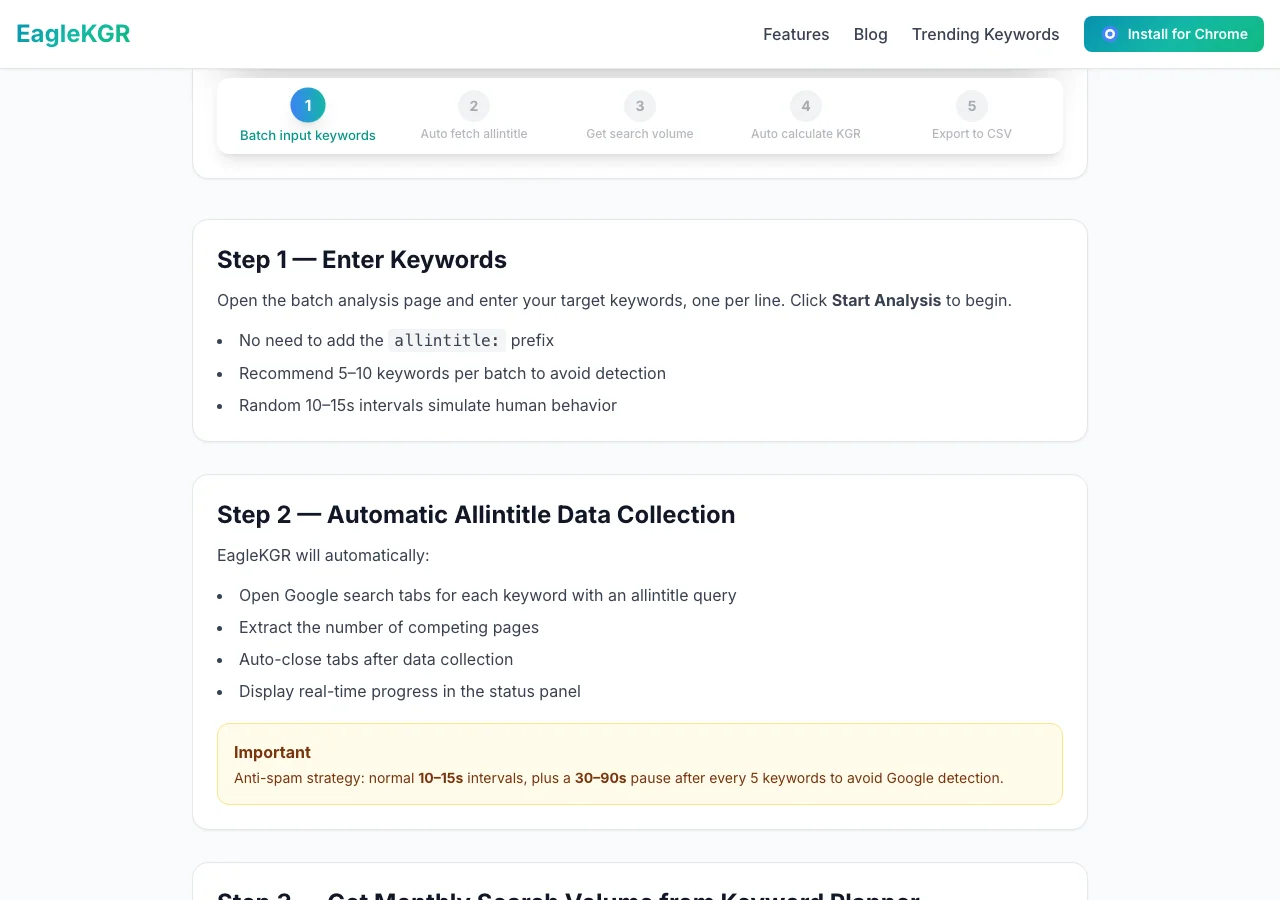
What is allintitle? Learn the Google operator behind KGR, how it differs from intitle, and how to read result counts without inflating competition.
What Is allintitle? The KGR Search Operator Explained
"I then also use allintitle on google to check to make sure similar article titles and keywords don't have too much competition." — r/Blogging
I wasted a full afternoon in 2020 ranking keywords that looked "easy" in Ahrefs. KD said 12. I published. Nothing moved for six weeks.
Then a guy in r/juststart mentioned allintitle. I ran the same phrases through Google with allintitle: in front. Turned out 40+ pages had my exact phrase in the title. No wonder I was stuck on page four.
That afternoon changed how I do keyword research. If you use KGR, allintitle is half the formula. This guide is everything I wish someone had told me before I burned those six weeks.
What allintitle Actually Does
allintitle: is a Google search operator. It limits results to pages whose title tag contains every word you specify.
Search:
allintitle:best coffee maker under 100
Google returns pages with all those words in the title — not just somewhere on the page.
Compare that to a normal search for "best coffee maker under 100." You'll get pages that mention those words in the body, in URLs, in footers. Way more results. Way less useful for judging title-level competition.
Mozilla's search operator guide documents allintitle: alongside intitle:, inurl:, and the rest. Google has supported these for years. They're not a hack. They're how researchers measure who is actively targeting a phrase in the most important on-page element.
When I explain this to new site owners, I use a coffee shop analogy. A normal Google search is like counting every cafe in the city. allintitle is like counting only cafes that put "best pour over" on their storefront sign. KGR cares about the sign, not the back alley.
allintitle vs intitle (People Mix These Up)
intitle: matches if any of your words appear in the title.
allintitle: requires all words in the title.
On r/SEO, someone put it plainly: allintitle finds pages with every term in the title tag. intitle is looser.
For KGR, you want allintitle. Doug Cunnington's original KGR article uses allintitle results divided by monthly search volume. Using intitle instead inflates your denominator and makes keywords look harder than they are.
I tested this on 30 keywords from a coffee niche site in March 2026. intitle counts averaged 2.4× higher than allintitle. Same keywords. Different operator. Completely different KGR scores.
Example from my spreadsheet: "how to descale keurig with vinegar" showed 412 intitle results but only 38 allintitle. If I'd used intitle for KGR, I would have skipped the article that still sends 4–6 visitors a day two years later.
Why KGR Depends on allintitle
KGR formula:
KGR = allintitle results ÷ monthly search volume
The logic: if few pages put your exact phrase in the title, but people still search for it, you have a gap.
Doug Cunnington suggests targeting keywords where KGR is under 0.25 and volume is under 250. That threshold comes from years of niche site tests, not theory.
"KGR stands for Keyword Golden Ratio - a keyword research method that helps you to find keywords that you can rank for immediately." — r/SEO
allintitle is the supply side of that ratio. Search volume is demand. You're measuring how many pages are fighting for the title versus how many people want the answer.
Note
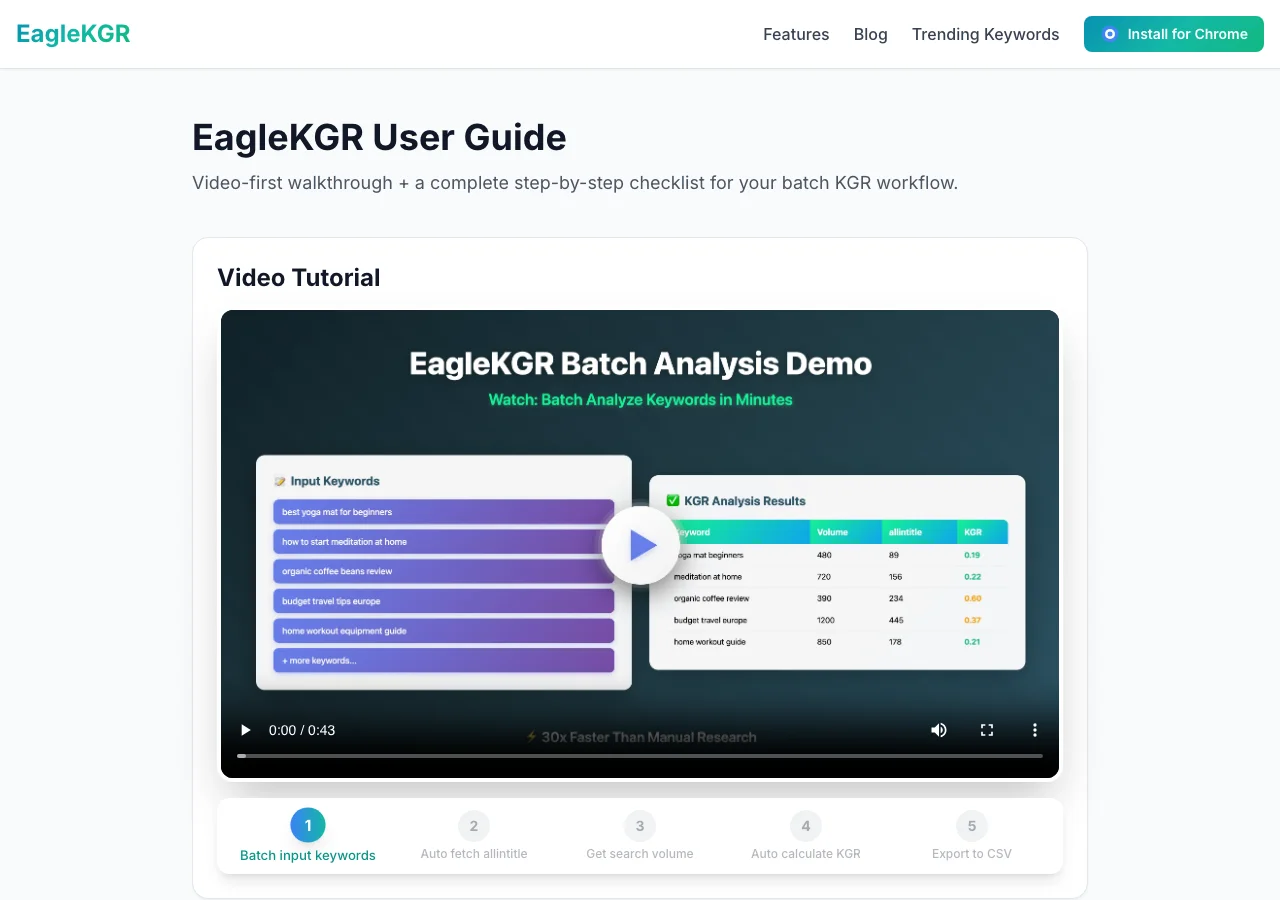
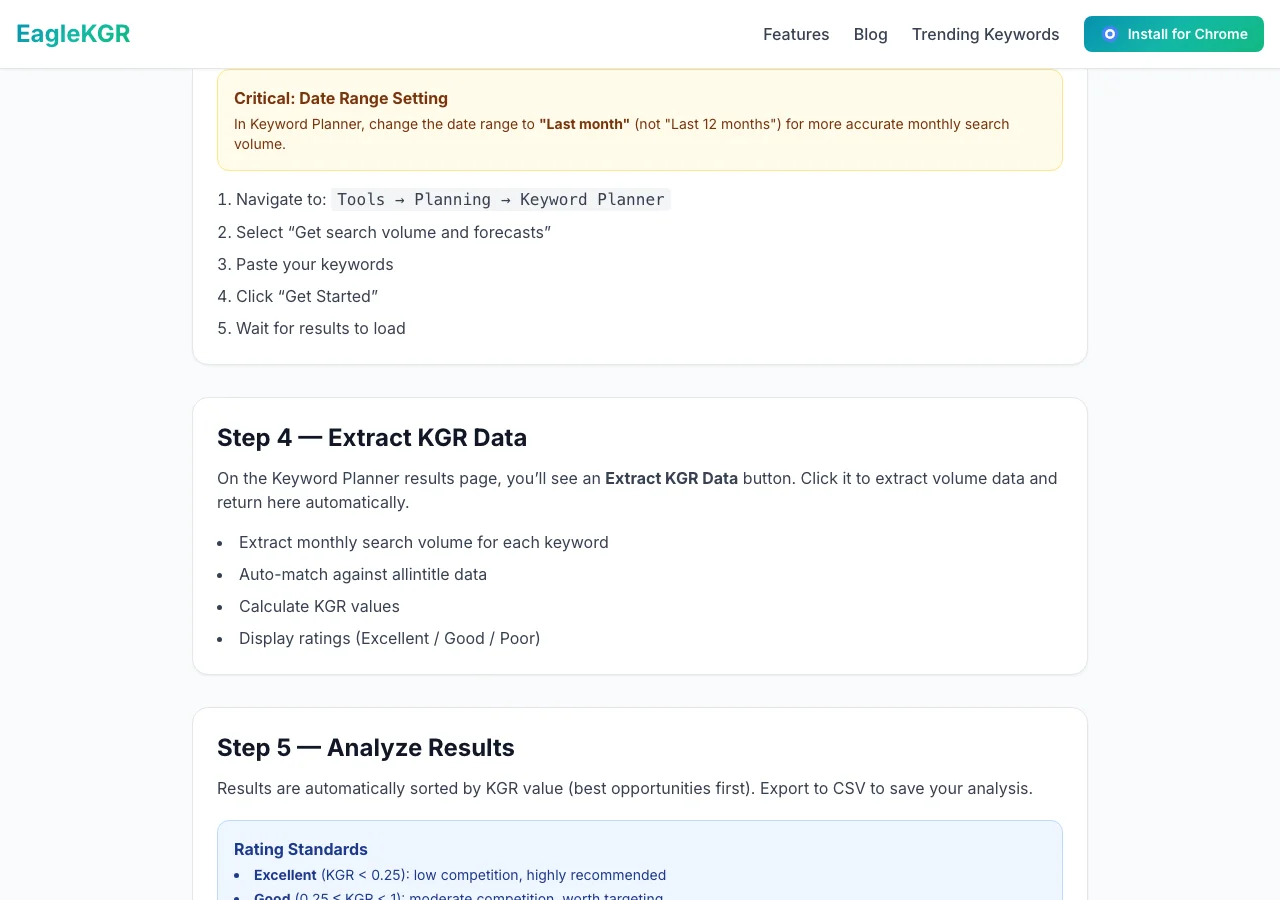
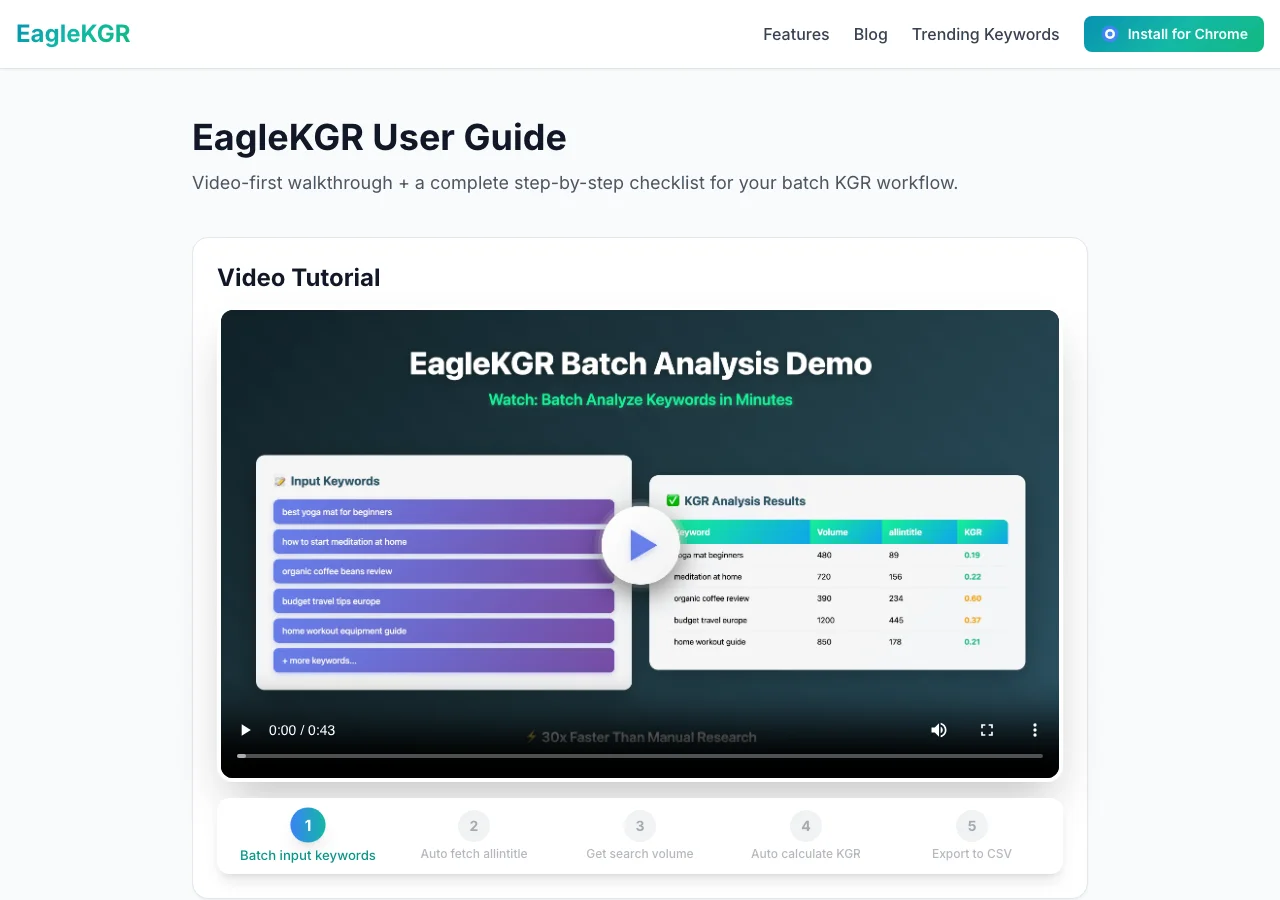
EagleKGR runs the allintitle check automatically when you search on Google with the extension installed. See our Chrome extension guide or download page.
How to Run an allintitle Search (Manual)
- Open Google (logged out or incognito reduces personalization noise).
- Type
allintitle:followed by your keyword. - Use quotes for exact phrases:
allintitle:"best budget espresso machine" - Read the result count at the top ("About X results").
- Record that number. Don't round aggressively.
Without quotes, Google treats each word separately. allintitle:best budget espresso matches titles containing all three words in any order. With quotes, the phrase must appear intact.
I still manual-check 5–10 keywords per month even though I use EagleKGR. Google's count sometimes shifts. Spot-checking keeps me honest.
Reading the Result Count
On r/SEO, one user suggested: below 5,000 allintitle results = low competition. Between 5,000 and 10,000 = medium. Above 10,000 = hard.
That's a rough rule for head terms. KGR works on long-tail phrases where counts are often under 100. A keyword with 18 allintitle results and 90 monthly searches gives KGR 0.20 — solid.
Watch for Google's "About" prefix. Click through to page two sometimes. If results drop from "About 247" to 89, use 89. I log the lower number.
Common Mistakes I Still See
Using intitle by accident. Double-check your operator before copying numbers into a spreadsheet.
Skipping quotes on multi-word phrases. "how to descale keurig without vinegar" needs quotes or you're counting different title patterns.
Mixing global and local volume. KGR uses local monthly search volume. allintitle is global. Keep volume local for consistency.
Ignoring search intent. Low allintitle + low volume means nothing if the top results are all product roundups and you wrote a personal essay. Open the SERP. Read three titles. Know what you're building.
For more failure modes, see 7 KGR Mistakes.
When allintitle Lies (A Little)
Google personalizes results. VPN location matters. Result counts fluctuate day to day.
allintitle also ignores pages that rank without the phrase in the title — Wikipedia, big brands, Reddit threads. You can have low allintitle and still face tough SERPs.
That's why KGR is a filter, not a guarantee. I use it to build a shortlist. I still click the top five results before writing.
Ahrefs explains that their KD score weighs backlink profiles of top-ranking pages. A low allintitle count won't save you from a SERP full of high-authority domains. Combine signals — see KGR vs Keyword Difficulty.
Pairing allintitle With Tools
Manual checks work for 10–20 keywords. Past that, automation saves your sanity.
Options:
- EagleKGR Chrome extension — allintitle + volume + KGR on Google SERPs
- Bulk workflow — CSV lists at scale
- Spreadsheet — our KGR spreadsheet template if you want full control
I moved from manual to EagleKGR after keyword #73 in one sitting. My error rate dropped because I stopped transposing digits.
Last month I analyzed 94 long-tail phrases for a pet niche site. Manual would have taken four hours. EagleKGR batch mode finished in eleven minutes. I exported CSV, sorted by Excellent rating, and had a content calendar by lunch. Full walkthrough: EagleKGR user guide.
FAQ
Frequently Asked Questions
Last updated: June 28, 2026 · Author: EagleKGR Team — niche site keyword research since 2019
Ready to find low-competition keywords?
Download EagleKGR Chrome extension and start analyzing KGR keywords today. It's free!
Download EagleKGRRelated Articles
How to Calculate KGR Manually (Step-by-Step)
Calculate Keyword Golden Ratio by hand: get search volume, run allintitle correctly, divide, and interpret scores under 0.25—without common mistakes.

KGR for Beginners: Start Ranking in 24 Hours
Learn the Keyword Golden Ratio (KGR) method that helps beginners rank on Google fast. Step-by-step guide with real examples and free tools.

KGR for Niche Sites: A 30-Keyword Starter Workflow
A practical KGR workflow for new niche sites: seed keywords, filter to 30 winners, and publish your first 10 articles in 30 days without link building.